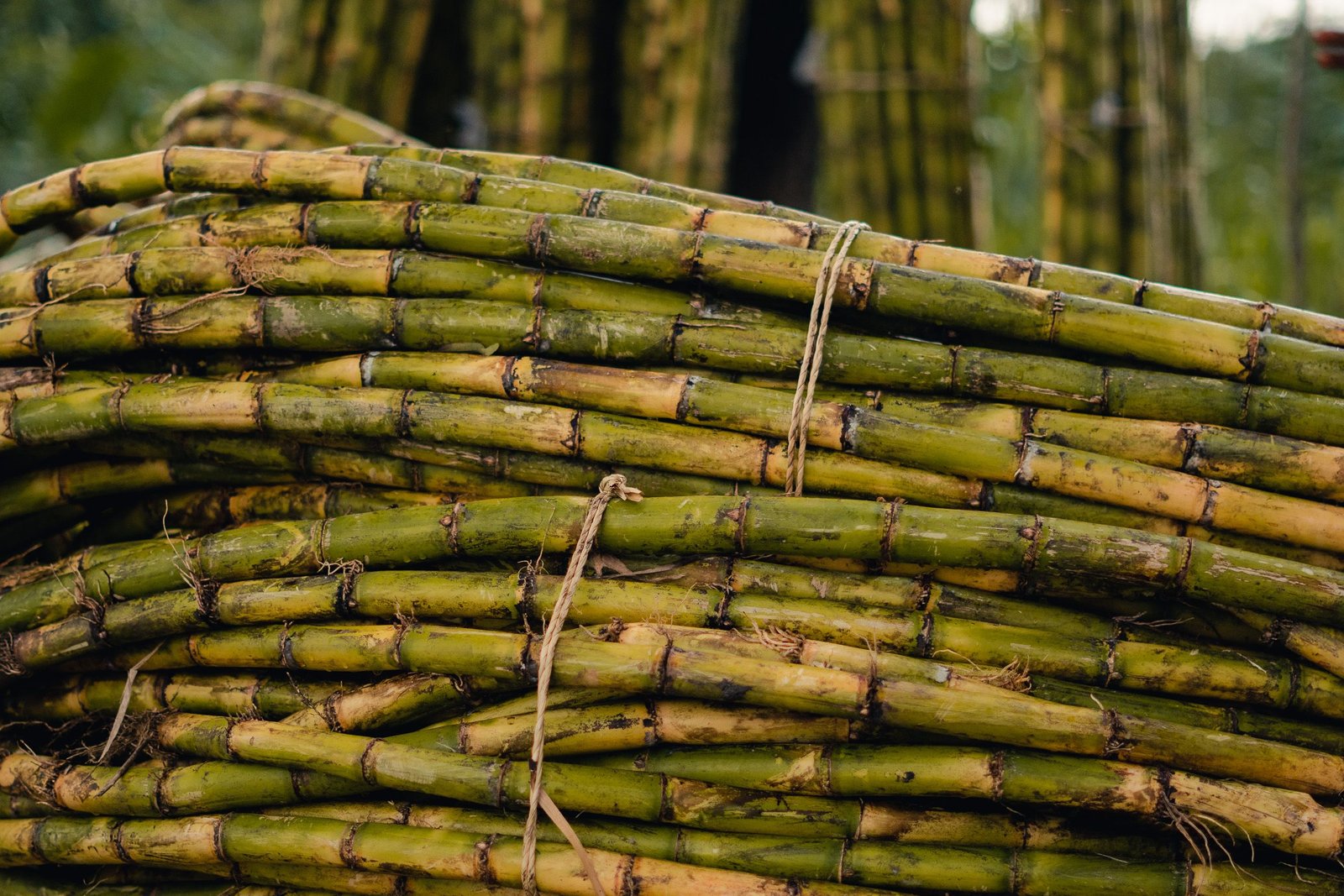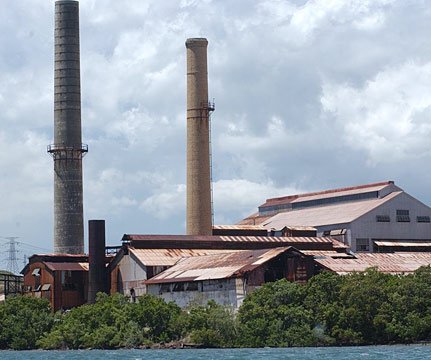
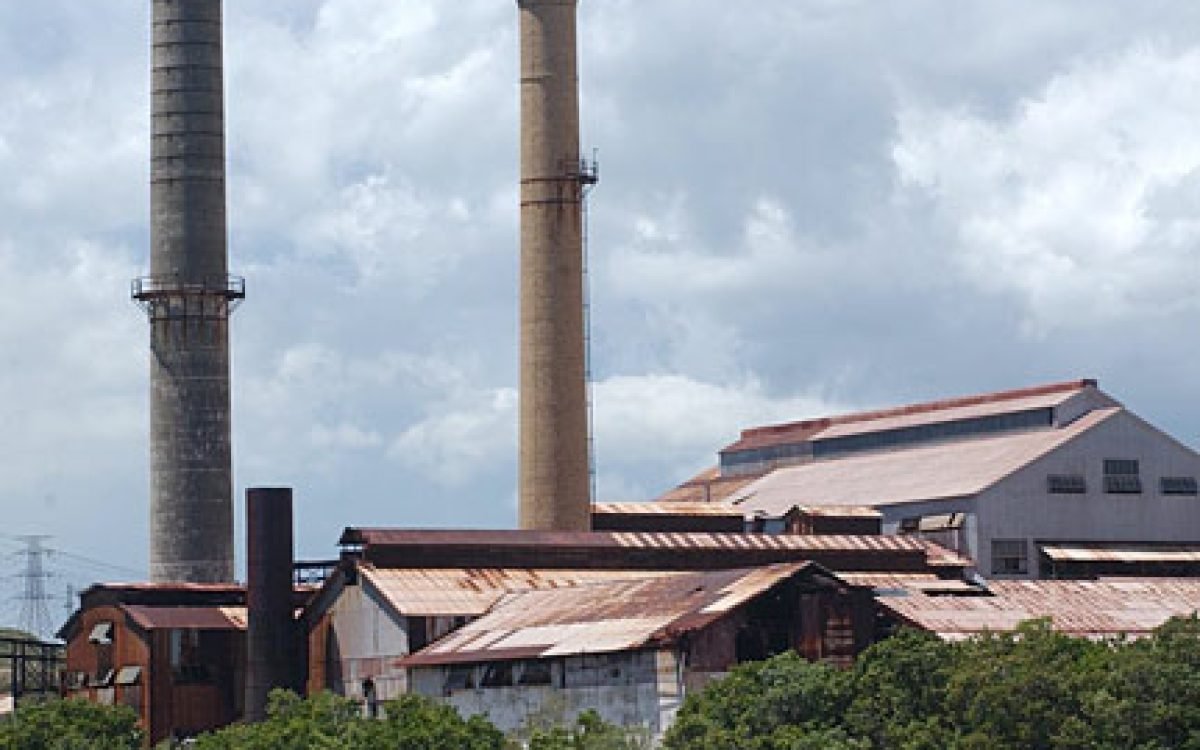
For hundreds of years, sugar cane was more than a crop in Puerto Rico.
It determined what land was worth, where railroads ran, how water was moved, where thousands of people worked, and who controlled enormous amounts of capital. At its twentieth-century peak, giant centrales processed cane around the clock and connected Puerto Rico to financial and industrial networks stretching through New York, Boston, Cuba, and the Dominican Republic.
Then, remarkably quickly, the industry disappeared.
The story begins centuries before the enormous concrete mills whose remains are still associated with Puerto Rico’s sugar era.
Sugar arrived early
Sugar production in Puerto Rico dates to the early years of Spanish colonization. The first mills were known as ingenios or trapiches, smaller operations that crushed cane and processed its juice into sugar.
According to historical material collected in the Puerto Rico Pathfinder research, Genovese settler Tomás de Castellón established San Juan de las Palmas in San Germán in 1523. More mills appeared near navigable rivers around San Juan during the 1540s. Over time, larger areas devoted to cane became known as haciendas azucareras. General Sugar History
Sugar did not rise steadily from that point. Production declined during parts of the seventeenth century before entering a major period of expansion between roughly 1790 and 1849.
Changes in Spanish trade policy helped. So did growing access to enslaved African labor. Puerto Rican sugar also benefited from disruptions to Haitian sugar production following the Haitian Revolution. By the middle of the nineteenth century, one source in the research collection counts 789 sugar plantations on the island. General Sugar History
That growth came at an enormous human cost. Slavery was fundamental to the plantation economy until its abolition in Puerto Rico in 1873.
The hacienda gives way to the central
The nineteenth century eventually exposed the limitations of the old plantation system.
Puerto Rican producers faced falling prices for unrefined sugar, hurricanes, drought, pests, taxes, changing trade conditions and, on many estates, outdated production technology. General Sugar History
At the same time, sugar production was becoming more industrial.
The San Vicente mill in Vega Baja, established in 1873 according to the research material, represented the emerging central model: larger factories using increasingly sophisticated machinery to process cane grown across a much wider area. Some plantation owners modernized their own operations. Other farmers became colonos, growing cane independently and selling it to a central for milling. General Sugar History
That distinction matters. A central was not simply a bigger version of the old trapiche.
Its economics depended on scale. A large mill needed a steady supply of cane. That meant controlling or contracting with thousands of acres, moving harvested cane quickly, financing expensive machinery, and coordinating transportation and processing.
Sugar was becoming an industrial system.
1898 changed who controlled that system
After the United States took possession of Puerto Rico in 1898, sugar entered another period of transformation.
U.S. capital flowed into the industry. Large operations such as Central Guánica and Fajardo Sugar expanded the scale of production, while Puerto Rico’s access to the U.S. market made the island particularly attractive to American sugar interests. General Sugar History
Historian César J. Ayala argues that looking only at the individual Puerto Rican companies misses much of what was happening.
The major centrales were linked through investors and directors to U.S. sugar refineries, banks and other Caribbean plantations. Sugar grown and milled in Puerto Rico became one part of much larger vertically integrated businesses. By the late 1920s, Aguirre, Fajardo, South Porto Rico and United Porto Rico together produced approximately 60 percent of Puerto Rico’s sugar. AyalaREPolEco
The corporate connections could even affect where profits appeared on paper. Ayala documents disputes over transfer prices in which raw sugar produced in Puerto Rico was sold between related companies at prices set in advance rather than through an open market. The arrangement could move profits toward mainland refiners while reducing taxable profits recorded in Puerto Rico. AyalaREPolEco
The cane field, in other words, was connected to Wall Street.
Sugar also reshaped the physical island
Industrial sugar required infrastructure.
Cane had to reach the mill quickly after cutting. Mills needed power. Fields needed water. Companies built or depended on rail systems, irrigation works, roads and communications networks to keep the centrales supplied.
A remarkable 1912 document from the Experiment Station of the Sugar Producers’ Association shows how seriously the industry approached these problems.
That August, sugar planters met at Central Fajardo after a prolonged drought. The discussion was not theoretical. Cane required enormous quantities of water, and drought threatened both crops and the expensive industrial system built around them.
The engineers discussed streams, pumps, wells, reservoirs, canals and field preparation. They calculated the amount of additional moisture cane required and evaluated the Fajardo, Mameyes and Blanco rivers as potential sources.
On August 14, 1912, an engineer measured the Fajardo River at roughly 29 million gallons per day. Using a much more conservative estimate for drought conditions, he calculated that it could still irrigate about 1,500 acres if irrigation continued around the clock. Irrigation Meeting 1910
It is a small moment in a very large history, but it makes the scale easier to understand.
A sugar central was not just a factory surrounded by cane. It required an entire landscape to function around it.
The wealth of sugar had another side
The growth of the industry did not mean that its prosperity was broadly shared.
Sugar depended on a large labor force, much of it employed seasonally. Workers cut cane, loaded it, transported it and kept the centrales operating. The research record also documents persistent poverty, inadequate housing and labor conflict.
Those tensions intensified during the late 1920s and 1930s.
In February 1928, roughly 3,000 sugar workers went on strike in Yabucoa, according to government records cited in the source collection. The same research records 90 strikes between 1931 and 1933. Workers also used la torcha, burning cane fields as another form of resistance. General Sugar History
The 1933-34 conflict became particularly severe. Police records cited in the collection reported 118 cane-field fires in areas affected by strikes, with Central Guánica among the principal targets. General Sugar History
This is an essential part of Puerto Rico’s sugar history.
The giant centrales represented technology, investment and extraordinary productive capacity. They also existed alongside profound inequality and an increasingly organized workforce demanding a larger share of the prosperity it helped produce.
Sugar reaches its peak, then loses its place
By 1930, 44 sugar mills were operating in Puerto Rico. General Sugar History
Yet the economic conditions that had built the industry were beginning to change. Sugar prices fluctuated. Labor disputes continued. Independent growers struggled with access to credit. Government policy increasingly emphasized industrial development rather than an agricultural economy centered on cane.
Puerto Rico still produced a record sugar-cane harvest in 1952. After that, however, decline accelerated.
Seventeen mills closed between 1951 and 1968, according to the historical summary in the research collection. The Puerto Rican government eventually tried to stabilize the remaining industry. The Land Authority acquired mills, and in 1973 the government created the Puerto Rico Sugar Corporation. General Sugar History
It was not enough.
Mills continued closing one after another. In 2000, operations ended at Roig in Yabucoa and Coloso in Aguada, identified in the source material as Puerto Rico’s last operating sugar mills. General Sugar History
An industry that had helped define Puerto Rico for centuries had effectively ended.
Sugar is gone. Its history isn’t.
It is tempting to tell this story as a simple rise and fall.
It was larger than that.
Sugar connected sixteenth-century trapiches to nineteenth-century haciendas, and haciendas to twentieth-century centrales. It connected cane cutters to engineers, colonos to corporate boards, Caribbean plantations to New York banks, and rivers in Fajardo to calculations about how many acres could remain productive during a drought.
It generated wealth and infrastructure. It also concentrated land and power and produced some of the island’s most consequential labor struggles.
Understanding that history makes the old centrales look different.
They are not simply ruins from an industry Puerto Rico once had. They are remnants of a system that helped shape the Puerto Rico that came after it.
Sources and Further Reading
- Irrigation (Proceedings of a Meeting of Sugar Planters, Held at Central Fajardo, August 15, 1912)
Published by The Times Publishing Co., San Juan, 1912. Digitized from Cornell University Library.
Full text publicly available · Public domain - César J. Ayala, 1994. Finance Capital versus Managerial Control in a Colonial Sphere: United States Agribusiness Corporations in Puerto Rico, 1898–1934. Published in Research in Political Economy, Volume 14 (1994), pages 195–220.